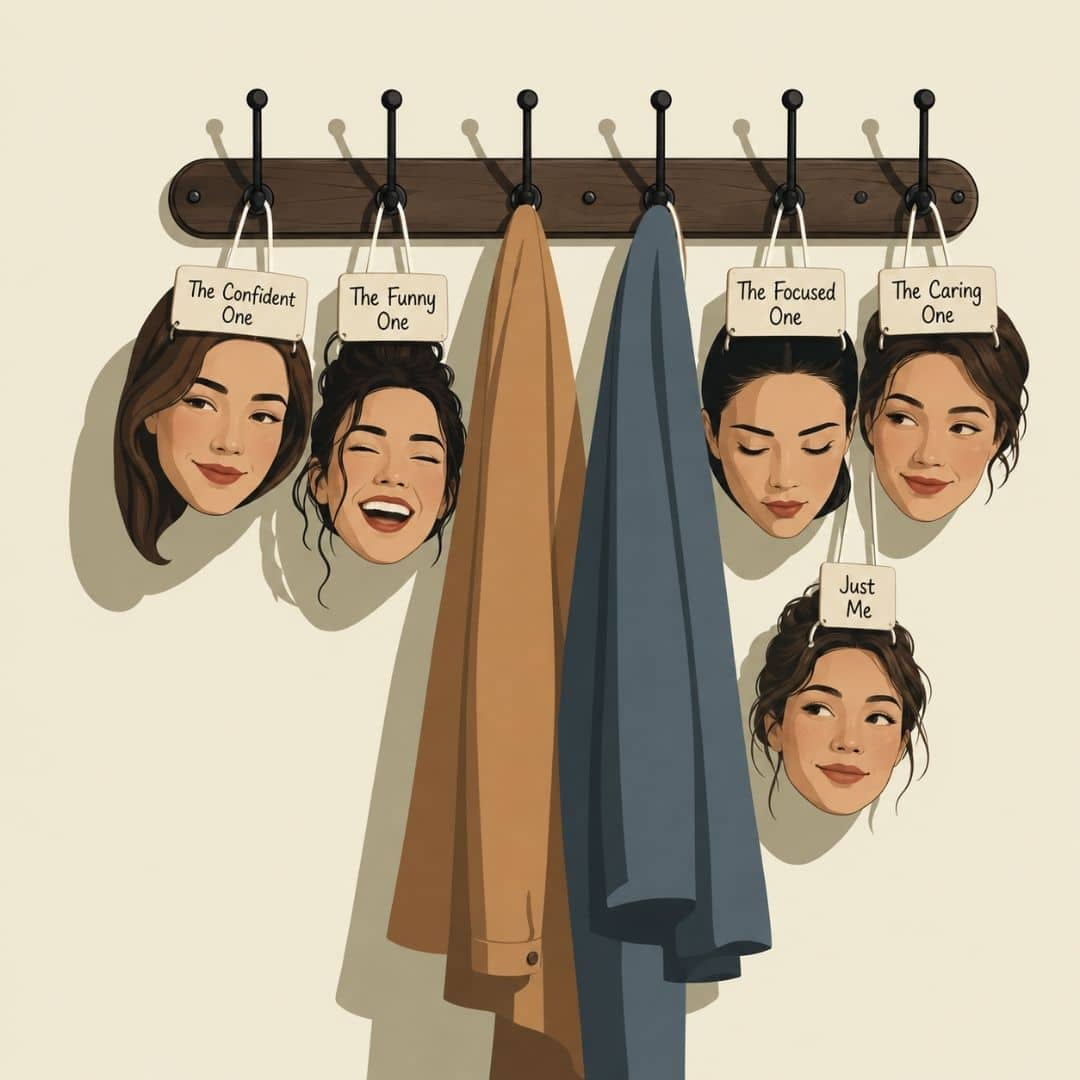
The Masks We Wear: Tool or Cage?
We are not the same person at a funeral as we are at a party. We aren’t the same with our boss as we are with our oldest friend. We don’t use the same voice when we are soothing a frightened child as we do when arguing our corner with our partner. All day long, without even realising it, we fluidly shift between different versions of ourselves.
Yet, we often feel like we shouldn’t be doing this. We worry that shifting through these different versions means we are being inauthentic. We feel we should have one consistent, true self to show the world no matter what. There is a narrative that we are all wearing fake masks, and that personal growth means ripping them all off to reveal the one true self underneath.
But what if the masks aren’t actually the problem?
Carl Jung and the Necessity of the Persona
The Swiss psychologist Carl Jung had a specific word for these social masks: the persona, taken from the Latin word for a mask worn by actors on a stage.
Crucially, Jung did not think the persona was something we should eliminate. He believed a mask was absolutely necessary. It is how we meet each situation appropriately and how we function in a complex, social world. You should behave differently at a funeral than at a party. The masks you wear aren’t lies hiding a “real” you. They are contextual. In a very real sense, they are all you.
The danger Jung named was much subtler, and it is a distinction worth learning: the trap isn’t having a mask; it is identifying with it so deeply that you forget it’s a mask. The mask was always meant to be optional. This is the boundary line we need to pay attention to:
A mask you can take off is a tool. A mask you cannot take off is a cage.
When the Mask Becomes You
What does it look like when a mask turns into a cage? For example:
None of these people is actively choosing to wear these masks anymore; instead, the persona has become them, and consequently, they have stopped getting what they actually need.
It is worth pausing to ask yourself: What is the mask that I feel I can’t take off? What role are you so deeply interlinked with that acting against it feels like a betrayal of who you are? In reality, it isn’t a betrayal of yourself – it’s just betraying a persona you’ve forgotten is completely optional.
Taking The Mask Off
If you want to ensure your masks remain tools rather than cages, try this two-step practice:
1. Name Your Personas
Look at your daily life and explicitly name the masks you wear, e.g., The Capable One. The Easygoing One. The Strong One. The Professional. The Carer, etc.
Now, find the one you feel you cannot take off. Identify the mask that, if you were to drop it for just one afternoon, would make you feel as if you were doing something inherently wrong or “not you.” That is the mask currently wearing you.
2. Take It Off on Purpose
Choose a safe place, or a safe relationship, and deliberately take that mask off for a moment.
When you do this exercise, notice the immediate internal resistance that whispers, “But this isn’t me.” Then, notice what lies right beneath that resistance. Is there a relief that you don’t have to be that persona? That you can take the mask off and know that you haven’t betrayed yourself at all? You will then have shown yourself that the mask was a choice all along.
The work of personal growth is never to live a life with absolutely no masks; that would make it impossible to navigate human society. True authenticity is simply knowing which mask you are currently wearing and making sure you still have the freedom to take it off to get what you genuinely need in the present moment.
For more reflections on authenticity and personal growth, explore more from our blog here.