Who Am I Now? How Life Changes Shape Our Identity

Have you ever found yourself wondering who you are without a particular job, relationship or role in your life?
So much of how we see ourselves is tied to the things we do, the people around us and the roles we’ve grown into. We might describe ourselves as the organised one, the confident one, the person everyone relies on, or someone who’s simply never been very good at certain things.
Over time, these descriptions become part of our identity. They give us a sense of who we are, what matters to us and where we fit in the world. But what happens when life changes, or when we decide we want something different for ourselves?
Interestingly, our sense of identity isn’t something we develop entirely on our own.
Over a century ago, sociologist Charles Cooley introduced the idea of the looking-glass self. He suggested that we develop part of our understanding of ourselves through how we imagine other people see us (Cooley, 1902).
Think about that for a moment. If you’ve always been described as the sensible one in your family or the shy one in your friendship group, you may have gradually come to see yourself that way too. The expectations and opinions of others can become woven into the beliefs we hold about ourselves, sometimes without us even realising it.
Add in our own experiences, values and beliefs, and we begin to build a fairly strong picture of who we are.
But that picture isn’t necessarily fixed.
When Life Changes, So Does Our Sense of Self
Having a clear sense of who we are can be reassuring. But what happens when life changes and the version of ourselves we’ve always known no longer quite fits?
Perhaps you’ve spent years building a career, only to find yourself questioning whether it’s still what you want. Maybe a relationship has ended, your children have grown up and left home, or you’ve moved somewhere new and suddenly feel a little unsure of where you belong.
Even positive changes, like getting married, becoming a parent or starting an exciting new job, can leave us questioning parts of our identity.
These experiences might look very different on the surface, but they have something in common. They can all change the roles, routines and relationships that have helped us understand who we are.
And research suggests that these shifts can have a real impact on our sense of self.
A study by Slotter, Gardner and Finkel (2010) found that people often experience a less clear sense of who they are following a romantic breakup. When our lives become closely connected with someone else’s, losing that relationship can also mean losing part of how we’ve come to define ourselves.
Interestingly, the opposite can happen when we enter a relationship. Psychologists Arthur and Elaine Aron explored how close relationships can expand our sense of self, as we begin to incorporate aspects of another person’s interests, perspectives and experiences into our own (Aron & Aron, 1986).
So whether we’re gaining something or letting something go, change can ask us to reconsider who we are.
Why Change Can Feel So Unsettling
William Bridges, who spent much of his career studying life transitions, made an interesting distinction between change and transition.
Change is what happens on the outside. It’s the day you move house, leave a job, get married or retire.
Transition is the internal process of adjusting to what that change means for you.
And the two don’t necessarily happen at the same pace.
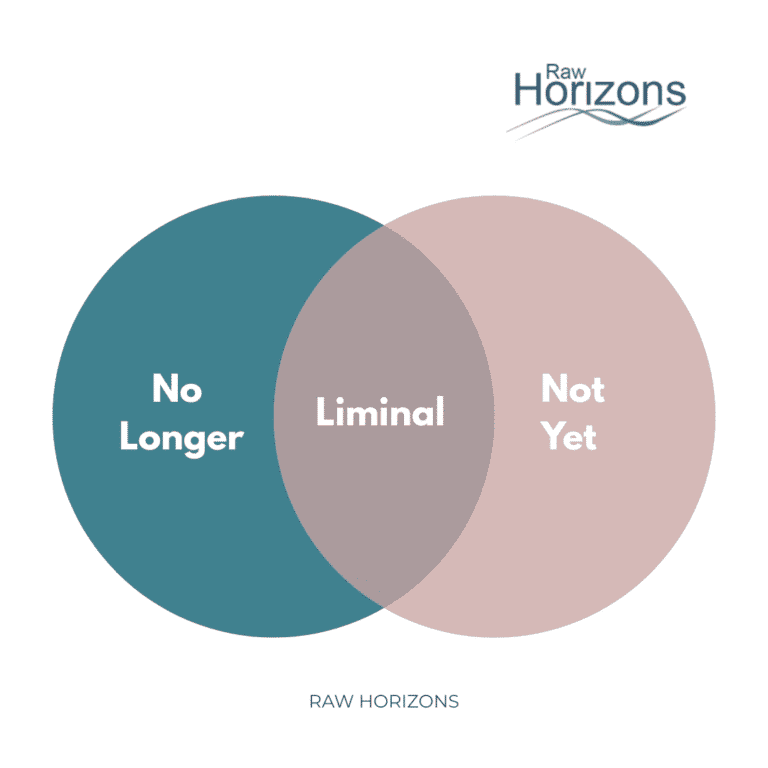
Bridges described three stages of transition: an ending, a period he called the neutral zone, and a new beginning.
The neutral zone is that in-between stage where we’ve started to let go of an old way of life or an old sense of who we are, but we haven’t quite settled into what comes next.
You might recognise that feeling. Perhaps you’ve left a job that no longer made you happy, but you’re not yet sure what you want to do instead. Or you’ve moved somewhere you’ve always wanted to live, yet still find yourself missing the familiarity of your old life.
It can feel uncomfortable, particularly when we’re used to knowing who we are and what we’re doing.
But I think there’s something reassuring about recognising that our internal adjustment can take longer than the change itself. We don’t always have to have everything figured out straight away.
What About the Changes We Choose?
Of course, change isn’t always something that happens to us. Sometimes, we’re the ones who decide we want something different.
Perhaps you want to become more confident, build healthier habits, change careers or start doing something you’ve always believed wasn’t really for you.
This is where I find the subject of identity particularly interesting, because so much of what we do in coaching involves helping people explore the person they want to become.
And that can mean questioning some of the beliefs they’ve held about themselves for years.
For example, imagine someone who’s always considered themselves shy. They might have spent years avoiding speaking up in meetings, meeting new people, or putting themselves forward for opportunities because they’ve come to believe, “I’m just not that kind of person.”
But what if being shy isn’t something that has to define them forever?
What if they could begin to see themselves differently?
Psychologists Hazel Markus and Paula Nurius explored this idea through their concept of possible selves (1986).
They suggested that we carry images of who we might become in the future. These include the people we hope to be, as well as the versions of ourselves we’re worried about becoming.
And these imagined futures can influence the choices we make today.
I find that fascinating, because it suggests that our identity isn’t only shaped by our past experiences. Our ideas about who we could become can also play a part in shaping what we do next.
Becoming the Person You Want to Be
One of the things I love about coaching is helping people recognise that the beliefs they hold about themselves don’t always have to remain the same.
If you’ve spent years thinking, “I’m not a confident person,” “I’m terrible at sticking to things,” or “I’d never be able to do that,” those beliefs can start to influence the opportunities you pursue and the decisions you make.
But changing how we see ourselves doesn’t necessarily require one enormous, life-changing decision.
Often, it begins with something much smaller.
Think back to the person who has always considered themselves shy. Rather than suddenly expecting themselves to become the most outgoing person in the room, they might start by contributing one idea in a meeting, striking up a conversation or saying yes to an opportunity they would usually avoid.
Each of those experiences gives them a chance to challenge the story they’ve been telling themselves.
And as those experiences accumulate, they may start to see themselves differently.
There’s an interesting connection here to neuroplasticity, the brain’s ability to adapt and change through learning and experience.
When we practise new behaviours and repeat them over time, the neural pathways involved in those behaviours can change and strengthen. It doesn’t mean that changing a long-held belief is always easy or that simply imagining a different version of ourselves will make it happen.
But it does mean that our patterns of thinking and behaving aren’t necessarily set in stone.
If you’re interested in understanding more about how the brain changes, I explore neuroplasticity and its role in learning and behaviour change in my free course, Rewire Your Brain.
For me, this is one of the most encouraging things about personal development. We can acknowledge the experiences that have shaped us without assuming they have to determine everything about our future.
A Few Questions to Reflect On
Whether you’re navigating a big life change or simply feeling ready for something different, it can be helpful to take a little time to consider how you see yourself.
Here are three questions you might like to sit with:
We don’t have to remain the same person we’ve always been. Our experiences, relationships and ambitions will continue to shape us throughout our lives, and that’s not necessarily something to resist.
Sometimes change is something we choose, and sometimes it arrives when we least expect it. Either way, perhaps we can give ourselves permission to grow beyond the identities we’ve become familiar with.
After all, who we have been is part of our story, but it doesn’t have to define who we become.